Module
2
·
tutorial
7.1
Storyfinding Manual: The Ultimate Guide
In this guide, the Muse Team highlights the critical importance of Storyfinding in filmmaking, specifically in finding solid and relevant characters. They define Storyfinding as the process of speaking with multiple people in a given story space to develop an understanding of the story space and identify the most robust and most relevant characters for consideration in the story.
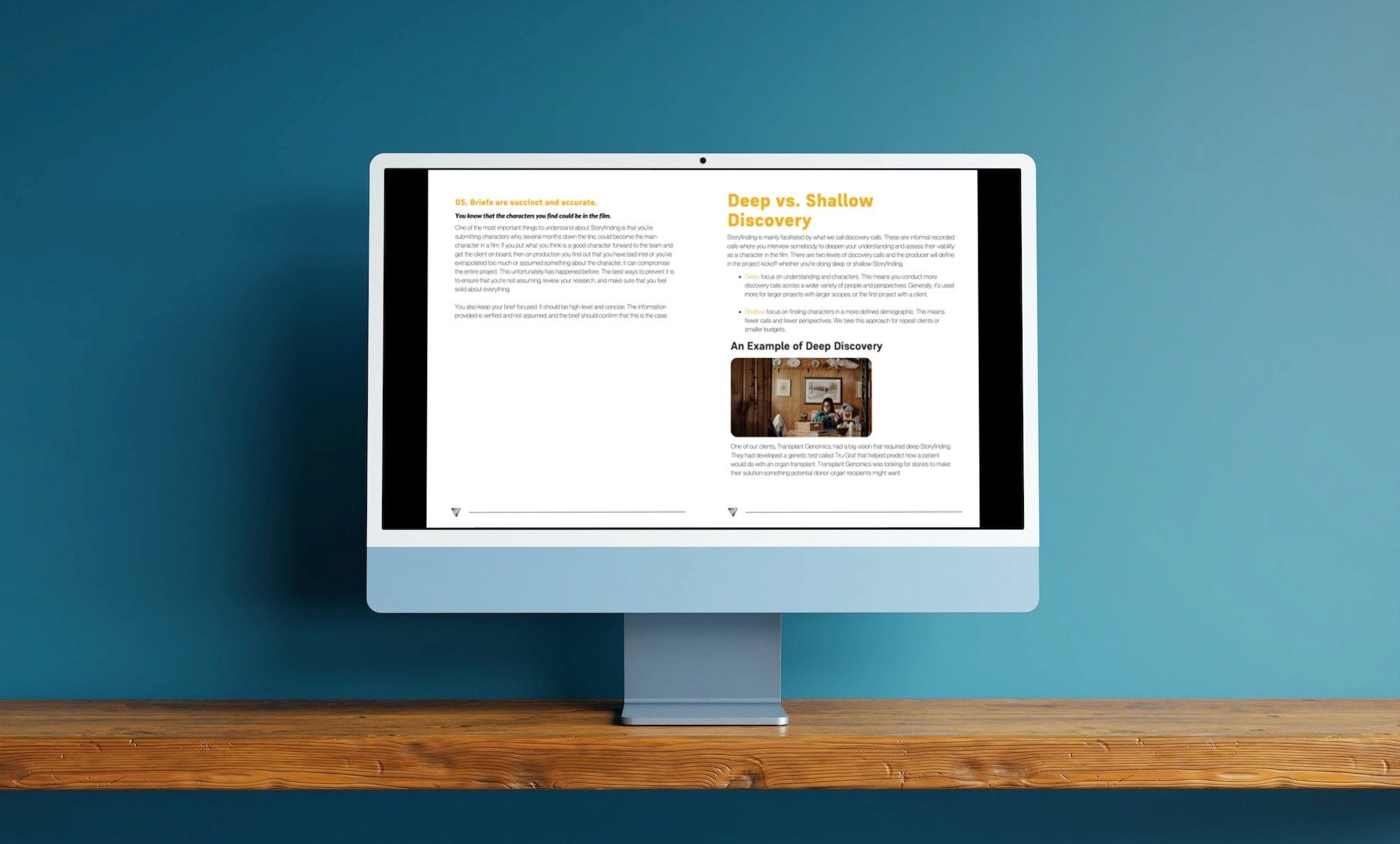
The guide covers the Five Signs of a Remarkable Storyfinder, which include creating a positive experience for interviewees, finding solid and relevant characters, noticing trends and patterns, being efficient with time, and creating concise and accurate briefs. The guide also discusses the difference between deep and shallow discovery and provides examples of each approach.
The guide advises taking 10 minutes to brainstorm and imagine ideal characters and their backstory with depth and desire.
For an outbound strategy, there are two paths to take, the direct approach or the indirect approach. The direct approach involves reaching out to potential characters directly, while the indirect approach involves finding out who knows the people you want to reach.
The inbound strategy is used for larger projects where it's hard to find people either directly or indirectly.
A discovery call guide is provided to help have a strong conversation, build trust with potential characters, and understand their strengths. Finally, the guide offers a five-step workflow, including the project kickoff, choosing the Storyfinding strategy, preparing materials, creative review and launch, and summarizing and presenting findings.
KEY TAKEAWAYS FROM THIS LESSON
Storyfinding is a critical first step in filmmaking that involves speaking with multiple people to develop an understanding of the story space and identify the strongest and most relevant characters for consideration in the story.
The strength of the character determines the story's altitude, with stronger characters providing a broader foundation on which to build and enabling the creation of more epic stories.
The Five Signs of a Remarkable Storyfinder include creating a positive experience for interviewees, finding strong and relevant characters, noticing trends and patterns, being efficient with time, and creating concise and accurate briefs.
There are two levels of discovery calls: deep and shallow. Deep discovery focuses on understanding and characters, while shallow discovery focuses on finding characters in a more defined demographic.
Examples of deep and shallow discovery are provided for Transplant Genomics and Fujifilm, respectively.
Take 10 minutes to brainstorm and imagine ideal characters and their backstory with depth and desire.
Outbound strategy has two paths to take, direct and indirect.
The inbound strategy is used for larger projects where it's hard to find people either directly or indirectly.
The discovery call guide helps to have a strong conversation and build trust with potential characters.
The five-step workflow includes the project kickoff, choosing the Storyfinding strategy, preparing materials, creative review and launch, and summarizing and presenting findings.
Resources
Muse Storyfinding Manual
Continue Course
53%
Why Story Is More Important Than Ever
9:00
What Exactly Is a Story
9:41
Who You're Learning From
11:09
Two Critical Forces in Story
14:02
The Four Pillars Of Story
10:50
Narrative Transportation
6:26
Character Identification
10:38
An Overview of the Process
5:43
Shifting Your Approach to Filmmaking
4:58
Storyfinding 101
7:32
People as the Big 3 Things
7:14
Plot as Curiosity
7:26
Purpose as the Keywords
10:03
Place as Authenticity
4:24
Step-by-Step Storyfinding Process Walkthrough
8:14
Storyfinding Manual
The 7 Types of Stories
13:06
The Three Creative Milestones
9:52
Developing Your Story Keywords
7:46
Tips for Better Keywords
Choosing Your Lead Character
9:28
Additional Character Roles
9:45
Developing Your Storyboards
9:47
Private Screening: I Am Dust
The Hook & Jab
10:05
Wrapping Plot in Place
14:42
Making Your First Film with Muse
14:46
Creative Milestone Templates
Storyfinding Maestro GPT
Exclusive Offer: Muse Storybuilder
16:51